
Marshall County Court Record Requests
Begin your Marshall County docket search at Indiana MyCase. You can search there by cause number, citation number, cross-reference, party, business, or attorney. Open the matching Case Summary. Then read the Chronological Case Summary, or CCS, for the full event history. When a document icon appears, the linked public paper can be downloaded. If MyCase shows no link, the Clerk may still have the paper on file.
Jenny Bennitt is the Marshall County Clerk. She keeps the records for Circuit Court and Superior Courts 1 through 3. Her office takes requests at the counter, by mail, and by email for pickup. A quick phone call first can confirm the record, the current cost, and how to pay.
- Find the court, cause number, party, and exact paper.
- Check MyCase for the public CCS and linked documents.
- Choose the counter, mail, email-for-pickup, or phone-assisted route.
- Give the document date and desired number of copies.
- Confirm the cost and whether certification is needed.
The Marshall Records Desk
The title "Clerk of the Circuit Court" undersells the job. One elected Clerk serves all four active Marshall County courts. The office accepts case-starting filings. It enters judgments and orders. It also processes court costs, fines, restitution, and other financial entries. Because of that unified role, the Records Department is the fallback for a missing MyCase image. The same desk handles pre-Odyssey files and any copy that must carry the Clerk's seal.
Marshall County Clerk Records Department
211 W. Madison Street
Plymouth, IN 46563
574-936-8922
Fax: 574-936-8893
records@co.marshall.in.us
Mail requests need cash or a money order payable to Marshall County Clerk plus a self-addressed stamped envelope. Email orders can be arranged for pickup. Call first if you want to pay by credit card.
Kinds of Court Records
Think of the CCS as an index of activity. The record is the larger file behind it. A Marshall County case file can hold pleadings, summonses and returns, motions, affidavits, exhibits, notices, orders, judgments, sentencing papers, payment transactions, transcripts, and audio. Access varies. Case type matters, and so does the status of each paper.
- CCS entries showing filings, settings, orders, and results
- Civil complaints, answers, motions, and judgments
- Criminal charging papers, orders, and sentencing records
- Probate, family, juvenile, and guardianship material when public
- Reporter-made transcripts and available hearing audio
A small-claims CCS might list service, a hearing, judgment, and collection events. The packet itself can hold a claim narrative, exhibits, returns, and signatures that never appear as separate docket fields.
Online Records Are Not Complete
Why does the online file differ from the clerk's file? The Indiana access framework explains it. MyCase links only what its public-access settings allow. A missing icon can mean a paper is unscanned, unavailable remotely, or restricted. It does not prove the whole case is confidential.
Rule 4 shows the statewide access layer that governs Marshall County court records.
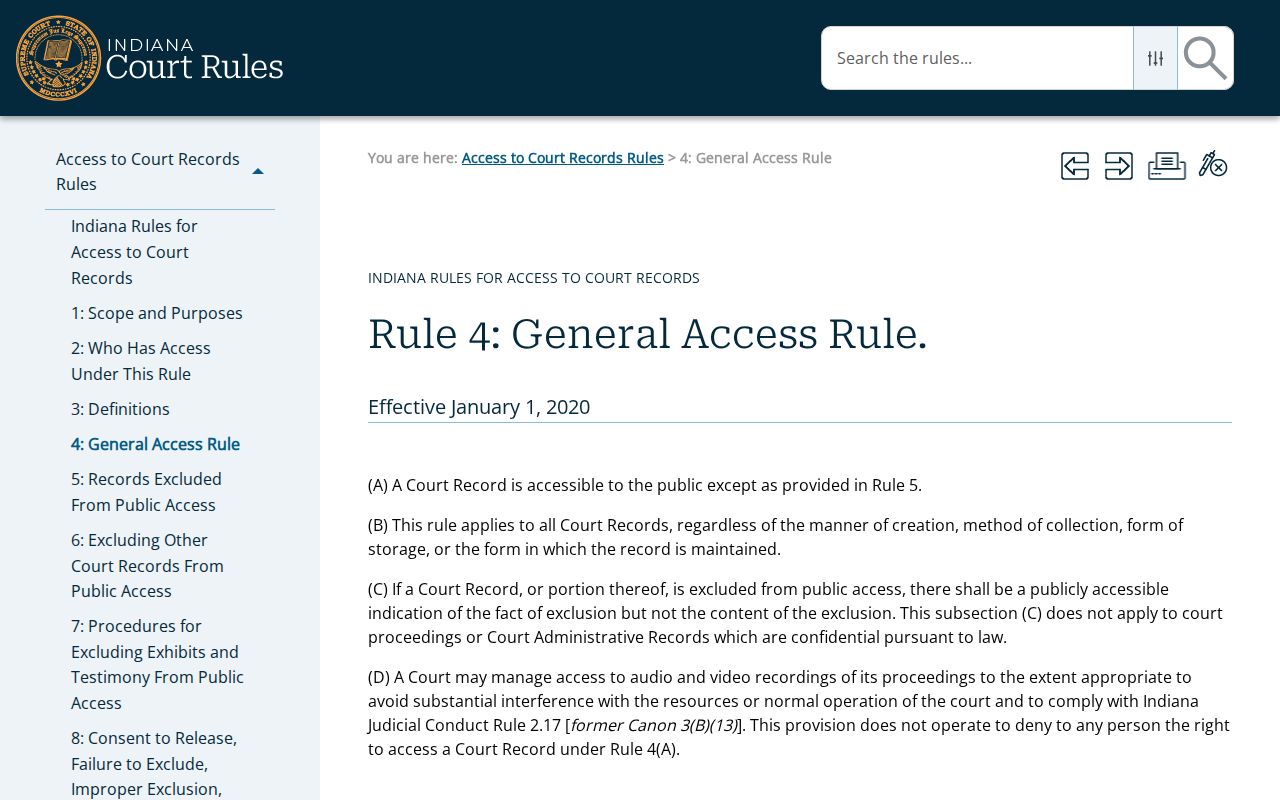
Access turns on court rules, not on whether a result displays a download button.
Best check: Give the Clerk the cause number and document name. Ask whether it is public, remotely available, and eligible for certification.
Court Records: What They Contain
A Marshall County Case Summary opens with a header. It then adds parties, charges or claims where relevant, events, documents, and sometimes financial data. Read it with care. A filing entry does not mean the court granted the filing. A setting is not a result. And a displayed balance reflects processed transactions, so it may not be current.
| Case number | A Rule 8 identifier such as 50D02-YYMM-CM-######. |
|---|---|
| Header | Court, type, filed date, status, flags, references, and related cases. |
| CCS events | Dates, descriptions, judge, hearing details, results, and document links. |
| Orders | Signed rulings or final papers when public and remotely posted. |
| Financial panel | Charges, credits, payments, and a balance as of a stated point. |
Indiana's local register of events is the Chronological Case Summary. Converted entries are older items moved into Odyssey, and they can carry less detail than later electronic entries.
Marshall E-Filing Is Different
Indiana Statewide E-filing lets attorneys and litigants submit papers through certified service providers. Marshall requires attorneys to e-file. It encourages people without counsel to do the same. Filing is not public access, though. A paper must be accepted into Odyssey. Display still depends on access rules.
The state e-filing page shows the system that sends papers into Marshall cases.
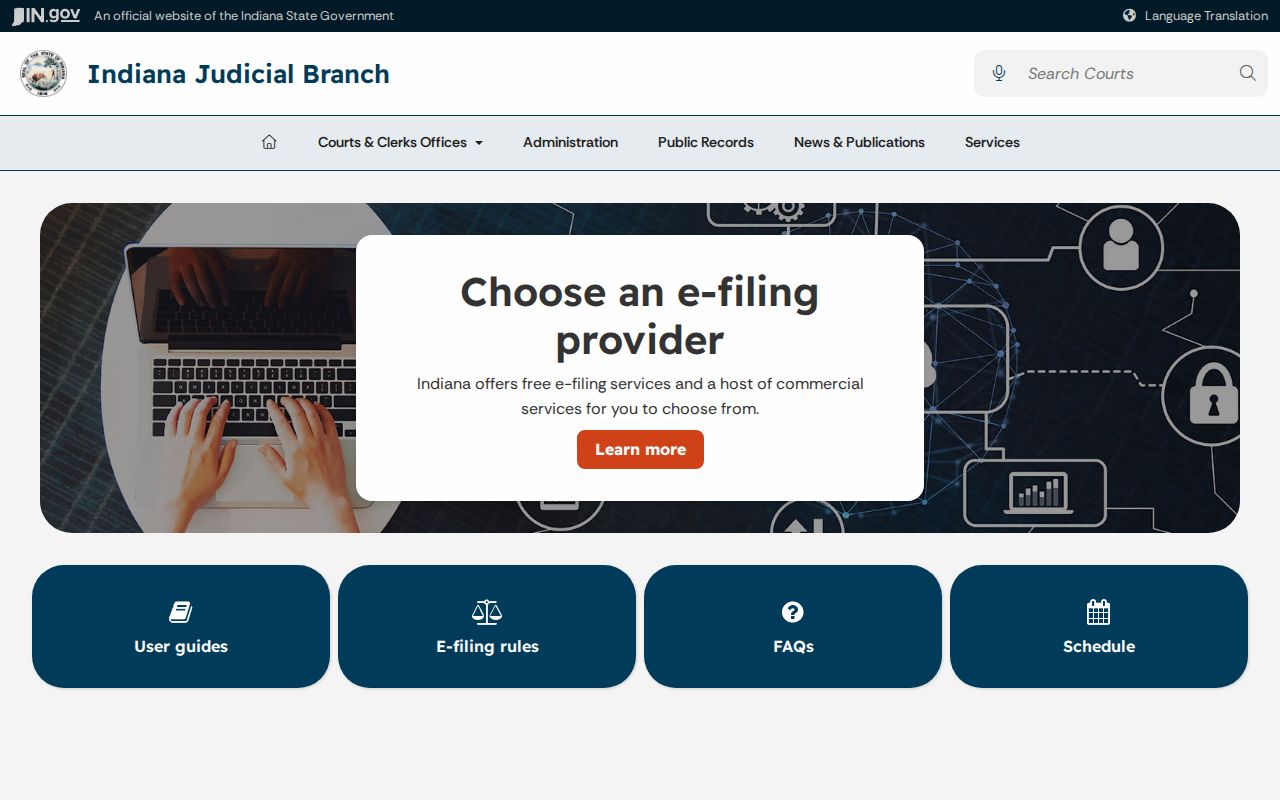
The distinction matters when you need proof. An e-filing receipt is not a file-stamped or certified copy from the Clerk.
A public paper can be filed yet missing from MyCase because it is excluded from remote access, unscanned, or still processing. Ask the clerk for the exact record rather than treating the online gap as final.
Copy Fees and Certification
A plain copy reproduces the file. A certified copy adds the Clerk's attestation, which is often what another court or agency wants as proof of authenticity. The Marshall form advises certification for any legal purpose. Costs depend on page count and the number of certifications.
| Marshall record item | Published amount |
|---|---|
| Plain copy | $1 per page |
| Certification | $3 per certification |
| Transcript | $5 per page, $50 minimum |
| Available hearing audio | $35 per hearing date |
Copy charges cite IC 33-37-5-1 and IC 33-37-5-3. Transcripts and audio go through a separate reporter path. Ask for an estimate. The reporter controls availability, timing, and the requested portion.
Marshall Transcript and Audio Orders
Reporter products come through the Record Xchange, not the public CCS. A transcript order needs core details. Give the case name, number, and judge. It also needs the hearing date, requested portion, confidentiality status, appeal status, payment type, and delivery date. The reporter may quote an estimate and require a deposit. Audio serves verification only. It is not a certified transcript and may not exist for every hearing.
The Indiana rules orders page documents the changes that shape public access.
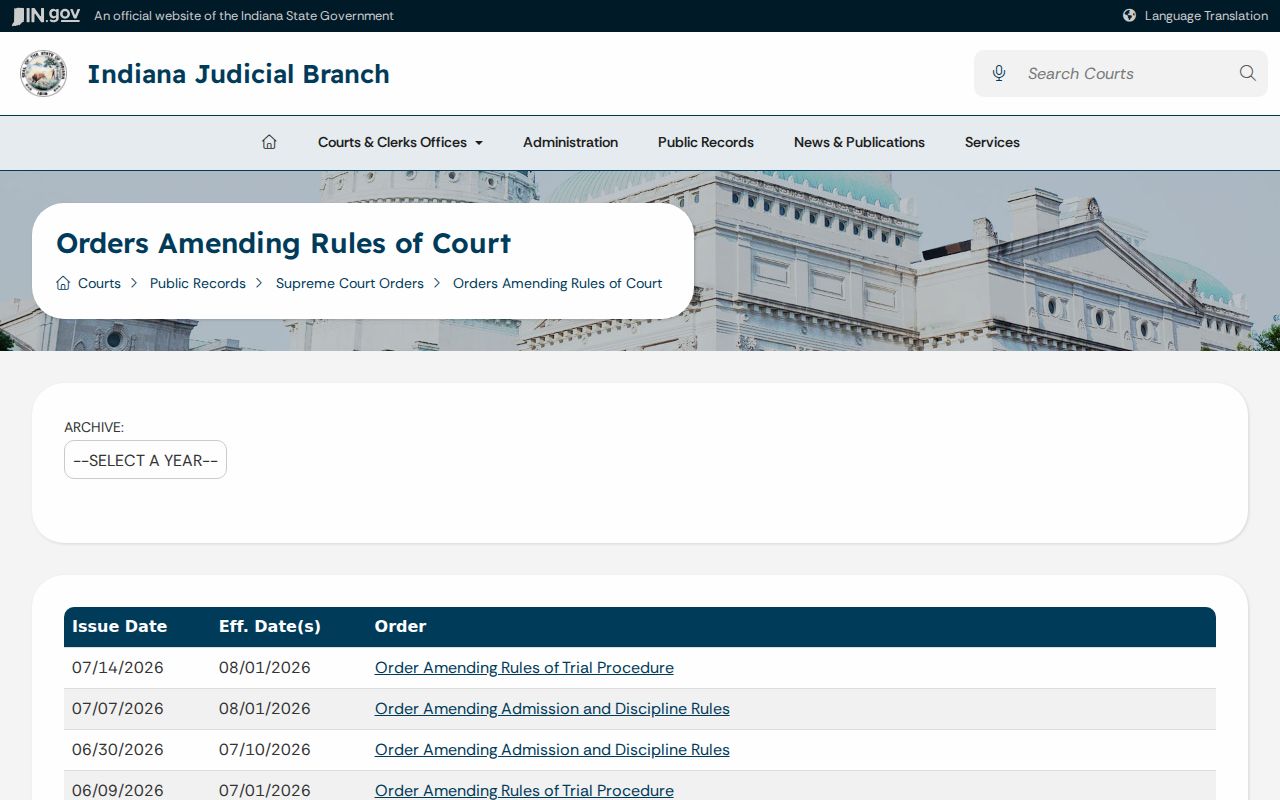
Statewide access rules and reporter requirements can change, so current rules matter. The Record Xchange judge menu does not list Circuit Court. Confirm a Circuit request with that court's reporter rather than picking a different judge.
Access Rules for Court Records
Indiana opens most government records through the Access to Public Records Act. You may inspect and copy any reasonably identified public record during business hours. Courts add their own layer, though. IC 5-14-3-4(a)(8) honors those judicial rules. Rule 5 shields a range of material from disclosure. That includes confidential and sealed files, mental-health records, investigative files, and search warrants. Other protected categories are kept out too.
For the full list of what Rule 5 keeps out of a court docket, read the official Rule 5 text.
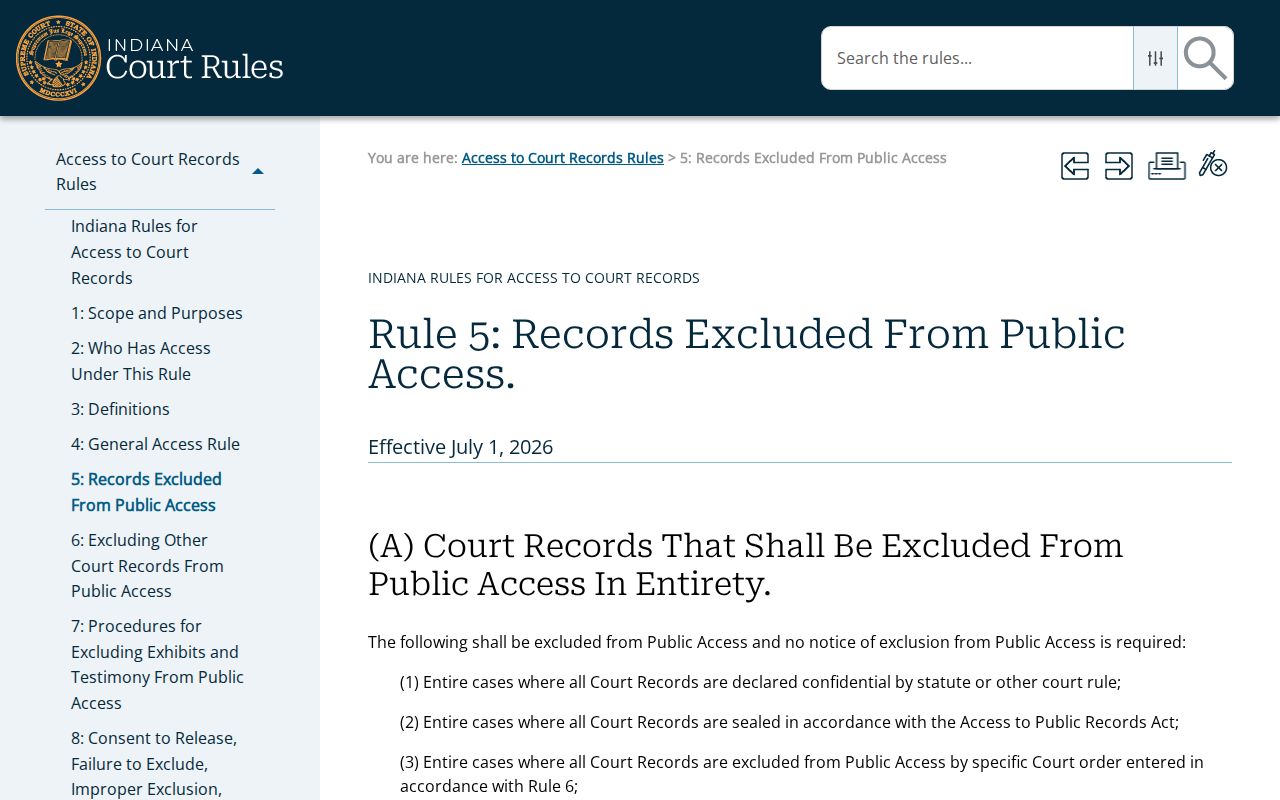
Its categories explain why a public indicator may remain while content stays unavailable.
Indiana access rule: Public access is the starting point, but each case and document must be checked against Rules 4 and 5.
When Marshall Records Are Missing
Start by tightening your MyCase search. Drop the hyphens. Strip leading zeroes from the cause number. You can also skip it and search by party name instead. Then filter the results by Marshall court, category, case status, and filing date until the docket narrows down. A blank result still means something. The case may be sealed or confidential, expunged, too old for full Odyssey coverage, or filed under a former name or an old court code.
When a public record should be there but is not, the state request instructions lay out the formal route to ask for it.
The Clerk stays the direct source for anything MyCase cannot deliver. Need an official copy of a Marshall file, or a record from the old paper era? That office is where the search ends. Older cases may sit under retired court codes. Examples include 50E01 Marshall County Court, 50H01 Marshall/Plymouth City Court, or 50I01 Marshall/Argos Town Court. Hand any old code to the Records Department, and the staff can trace the file. The Marshall County docket search walks through each field. Each one helps pin down a cause number.
Note: A search screen shows none of the legal outcomes. It is not proof of service, judgment, payment, or disposition. The current state of a case stays hidden too.