
Marshall County Civil Docket Searches
Indiana MyCase is the first public route for a non-confidential Marshall County civil docket. Search by one case key, a party or business name, or an attorney. The Case tab accepts a case number, citation number, or cross-reference, but only one of those fields at a time. Name searching supports a sounds-like option, filing dates, case status, and a Marshall court filter. A known cause number is best because common names can return unrelated cases.
Marshall cause numbers begin with the court identifier. Circuit is 50C01, while Superior Courts 1, 2, and 3 are 50D01, 50D02, and 50D03. Civil type codes then distinguish tracks such as PL, CT, SC, EV, CC, or family matters. Hyphens and leading zeros can be omitted in MyCase, but exact entry reduces ambiguity.
- Open MyCase and choose Case, Name, or Attorney.
- Enter the exact cause number or narrow a name by court and filing date.
- Match the case type, court code, parties, and filing date.
- Open the Case Summary and read the CCS in date order.
- Request a missing or certified item from the Marshall County Clerk.
Marshall Civil Search Alternatives
MyCase is not the only discovery route. Marshall County links Doxpop, which can show basic open-case information without a login and offers account-based searches and document images. Use it to locate a possible cause number, then confirm the result in MyCase or with the clerk. Vendor search and image charges depend on the current plan, so they are not the same as clerk certification fees.
The Doxpop product image comes from its official service page.
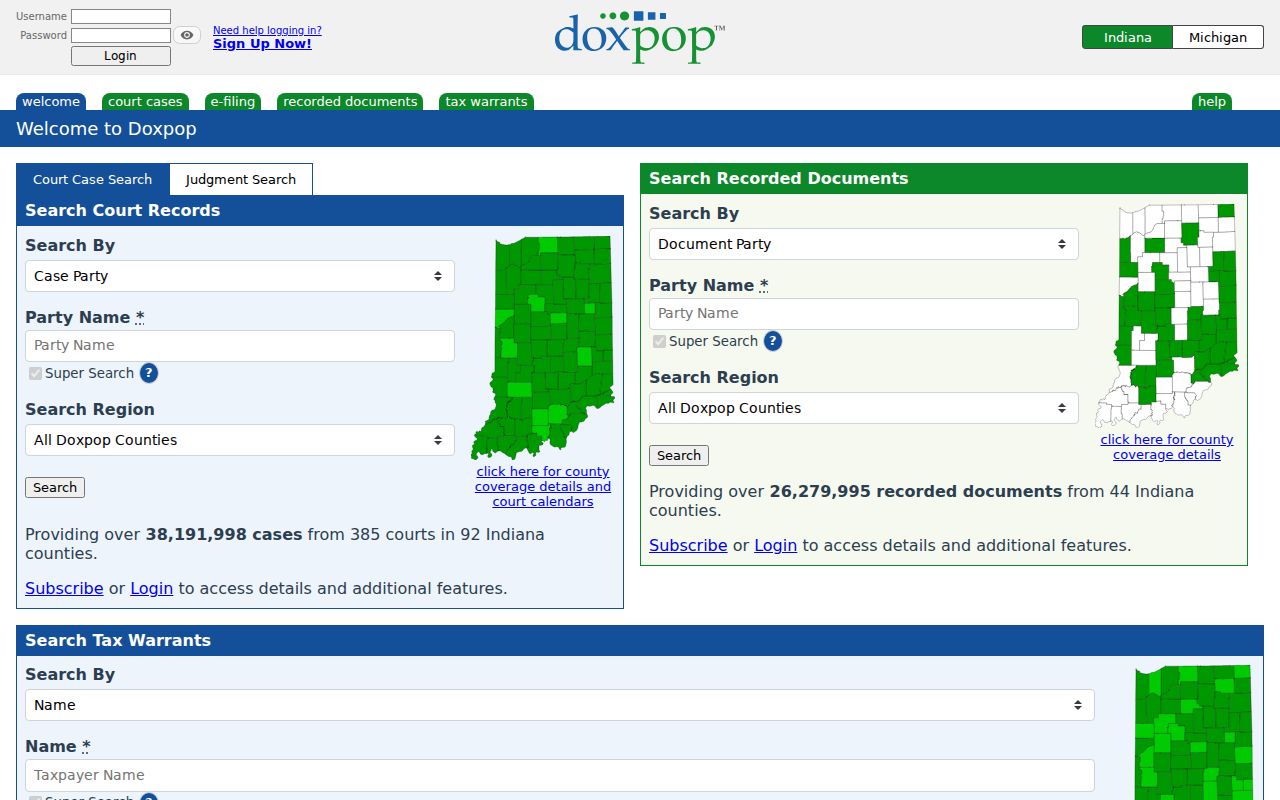
The service can help with discovery, but the elected clerk remains the source for the official Marshall County civil record.
The public-information image is sourced from Doxpop's public access description.
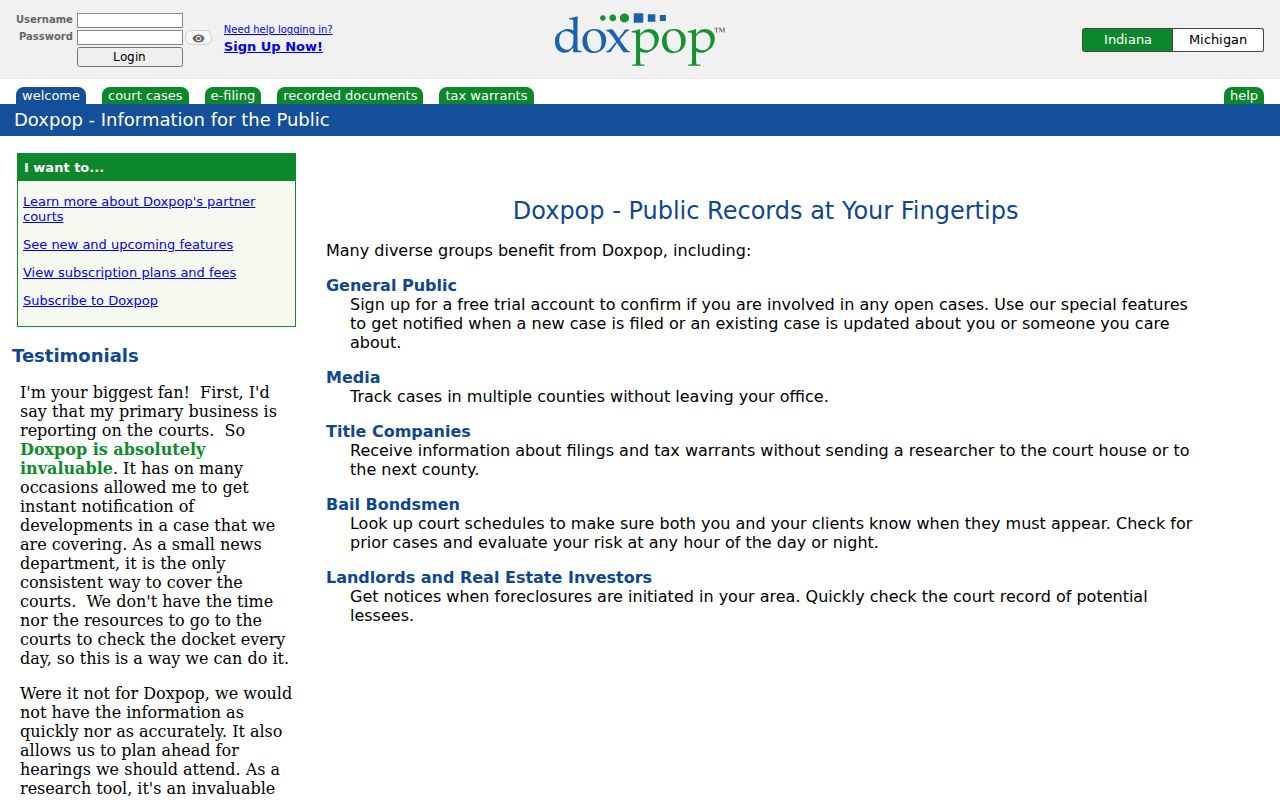
Its distinction between open information and paid document access helps explain why a search result and an official copy are different products.
Civil Dockets: What They Show
A Marshall civil Case Summary groups the case header, parties, attorneys, status, references, financial data, documents, and CCS events. Read the sequence rather than one isolated label. A motion may be filed, set for hearing, continued, and later ruled on. A document icon means the item is available through that interface, not that every public paper has been scanned.
| Case Number | Court code, filing year and month, civil type, and six-digit sequence, such as 50D02-YYMM-SC-######. |
|---|---|
| Parties | Plaintiff and defendant, or petitioner and respondent, when public. |
| Filings | Complaints, answers, appearances, returns of service, motions, and linked documents. |
| Settings | Date, time, hearing type, judicial officer, location, result, or cancellation. |
| Judgment | Dismissal, default, final order, judgment, or other recorded disposition. |
Marshall Small Claims Records
Superior Court No. 2 is the main local route for SC small claims and EV eviction matters. The county's filing materials show that a claim requires party and service details, and an ejectment filing also requires the state appearance form. Those papers create docket events when accepted. A return of service matters because it records whether notice reached the opposing party, while a default judgment is a court result, not proof that every sum sought was awarded.
The county-linked digital record store is shown in The Record Xchange portal.
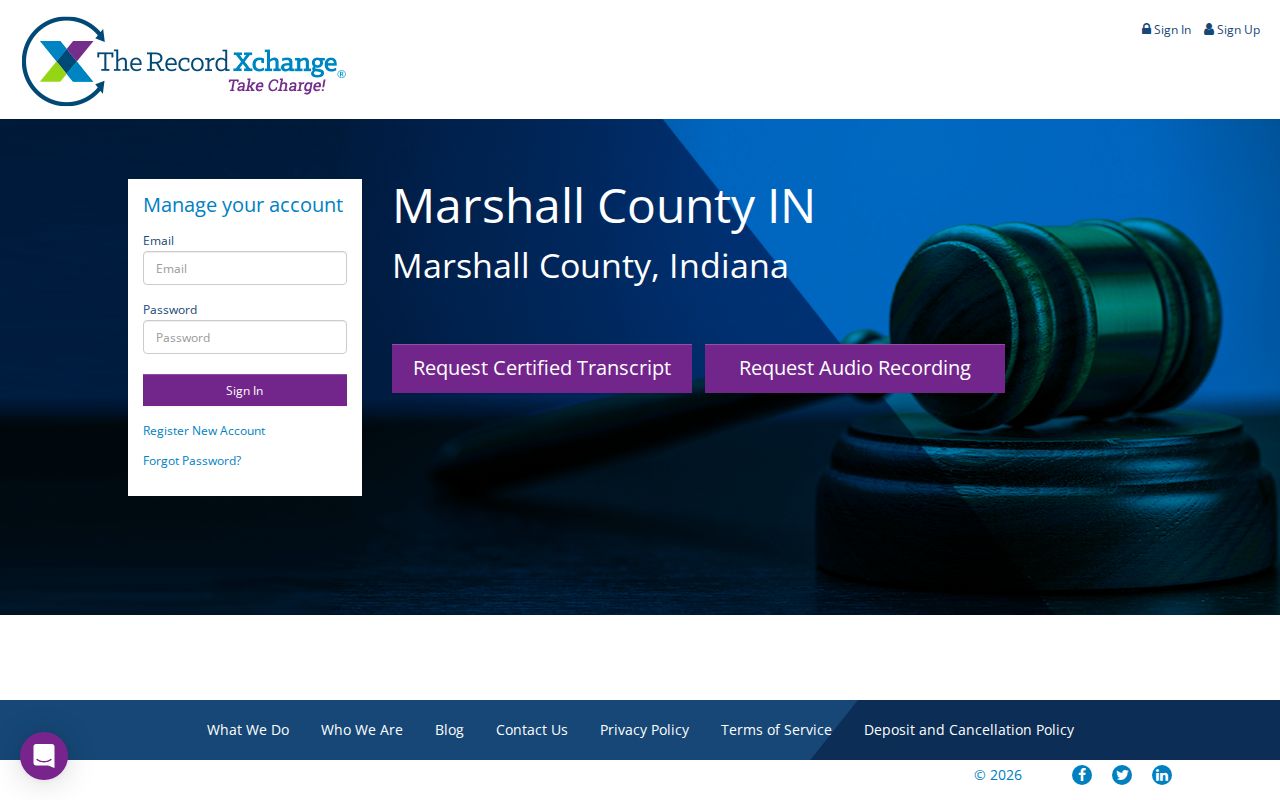
That portal serves transcript and audio requests. It does not replace MyCase for CCS searching or the clerk for certified civil filings.
A source image for the request workflow comes from the Marshall County audio product page.
Audio can preserve what was said at a hearing, while the CCS supplies only the event entry and result fields.
What Cases Fill the Civil Docket
The 2026 allocation plan spreads civil work across all four active courts. Circuit receives assigned civil plenary and tort matters plus special categories. Circuit and Superior 1 share family, adoption, estate, guardianship, and trust categories. Superior 2 handles small claims and evictions. Superior 3 receives civil collection and mental-health categories. Related-case rules can keep a filing with a court that already knows the dispute.
- PL civil plenary and CT civil tort claims
- CC civil collection, SC small claims, and EV eviction matters
- DC and DN family cases
- ES and EU estates, GU and GV guardianships, and TR trusts
- MH mental-health and other assigned civil matters
Marshall Civil Filing Channels
Attorneys must use Indiana Statewide E-filing through a certified service provider, and self-represented filers are encouraged to e-file. Filing is not the same as public viewing. Odyssey is the court's case-management system; MyCase publishes the permitted public layer after entries are accepted. A person may also work through the clerk's counter or written request when a paper is missing online.
The request-account image comes from The Record Xchange registration page.
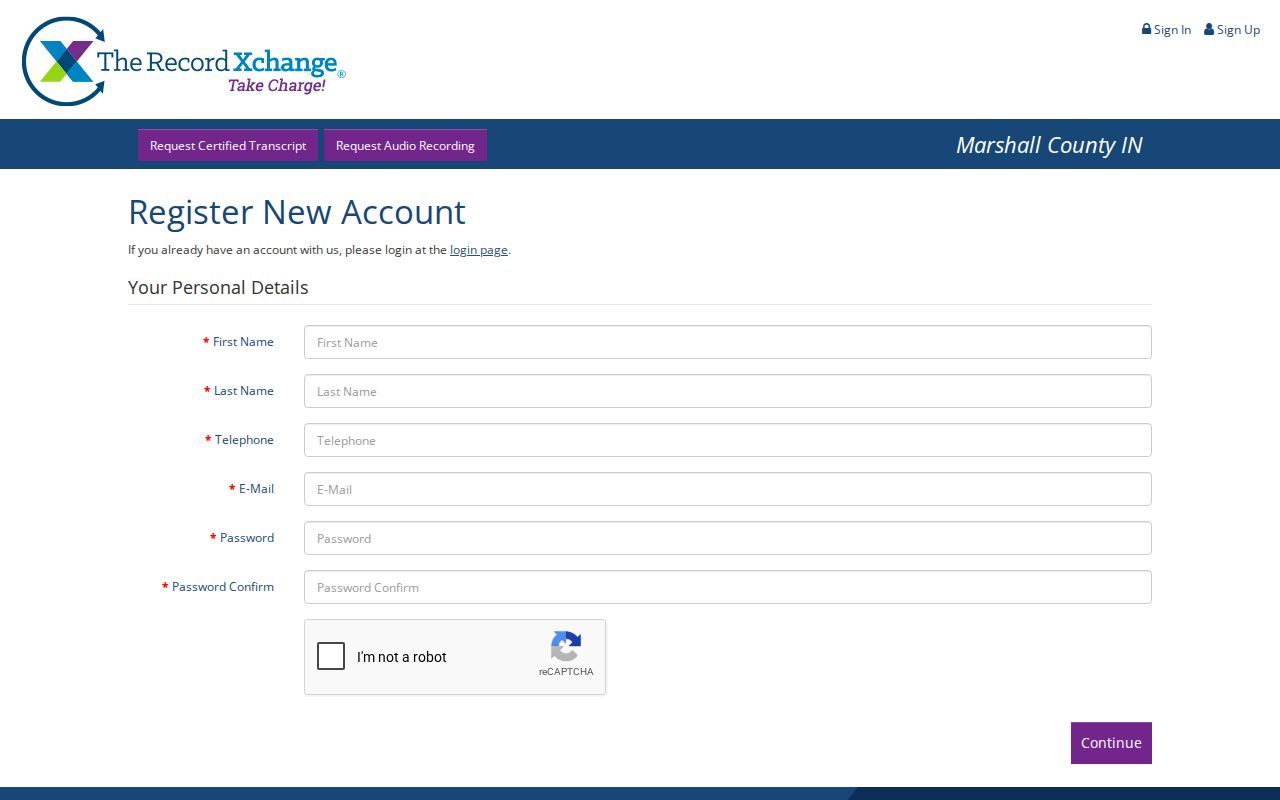
Registration supports the separate media-order process. It does not grant broader access to sealed or confidential civil records.
Hearings on the Civil Docket
A civil setting can be a status conference, pretrial conference, motion hearing, provisional-order hearing, guardianship hearing, final dissolution hearing, or trial. The public Marshall County court schedule showed Superior Courts 1 and 2 as participating courts when researched. Circuit and Superior 3 settings may still exist without appearing in that limited public calendar.
Confirm a setting in the CCS and in the court notice. A continuance moves a hearing; it does not dismiss the case. A canceled or reset event may contain a reason, result, comment, session, and judicial officer. When sources conflict, call the court that set the hearing.
Marshall Civil Transcript Requests
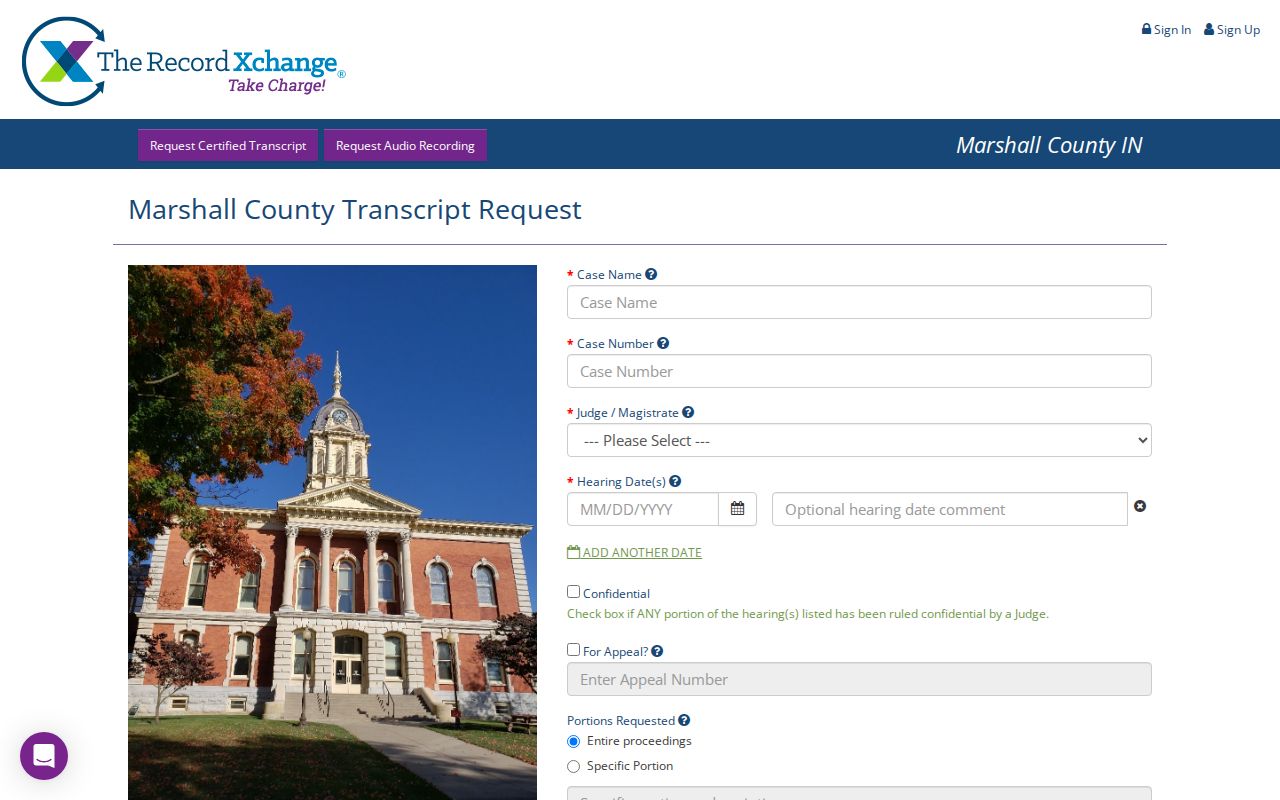
A docket entry records that a hearing occurred, but not every spoken word. The county's Record Xchange form asks for case name, cause number, judge or magistrate, hearing date, requested portion, confidentiality, appeal status, payment method, and desired completion date. The published county notice states $5 per page with a $50 minimum beginning January 1, 2025, subject to the reporter's estimate.
The transcript product image is linked from the official Marshall transcript request listing.
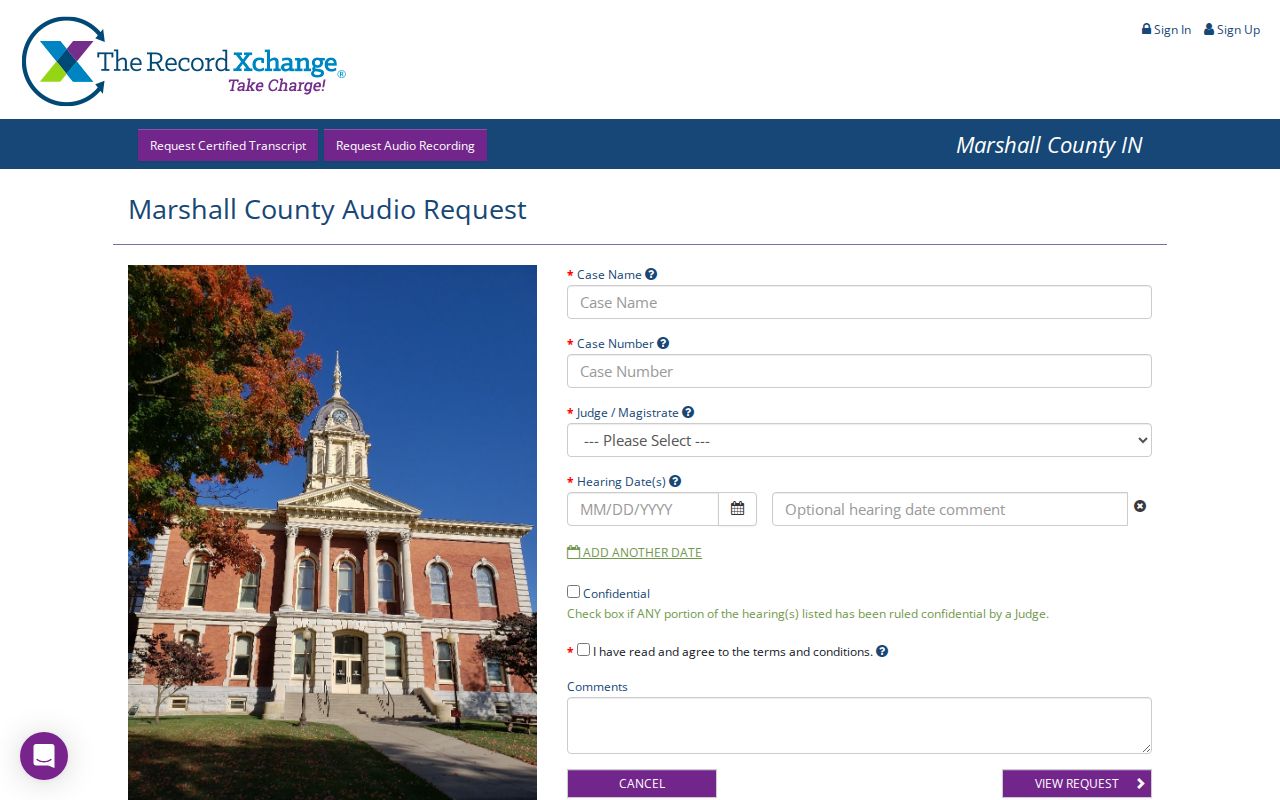
A transcript answers what was said. The civil CCS remains the faster tool for dates, filings, orders, and procedural history.
Who Can See Civil Dockets
Indiana Administrative Rule 9 starts with public access to court records, subject to specific exclusions and redaction duties. A public Marshall County civil docket can omit sealed material, confidential personal data, juvenile information, and protected details in certain family or protection-order matters. Absence from MyCase does not prove that no case or document exists.
Key rules: Access Rule 4 establishes the public-access presumption and reasonable inspection methods. Access Rule 5 identifies records excluded from public access. Access Rule 9 governs requests to prohibit or obtain access.
For a certified judgment, an older paper file, or an item absent online, contact Jenny Bennitt, Marshall County Clerk, at 211 W. Madison Street, Plymouth, Indiana 46563, 574-936-8922. Public hours are Monday through Friday, 8:00 a.m. to 4:00 p.m. Give the cause number and exact document title when possible.
A public CCS should also be distinguished from the documents behind it. A short entry may say that an order was entered, service was returned, or a motion was denied. The linked order, return, or motion supplies the actual terms. If no link appears, ask the clerk for that named filing rather than requesting an undefined full file. State whether a plain or certified copy is needed and verify the current fee before ordering.